السبت، 12 أكتوبر 2013

Google to put tablet apps front and center next month


Google plans to simplify how Android tablet owners find tablet-specific apps in the Play Store as part of a change next month.

Come November 21, Google says its "designed for tablets" section will effectively become the first thing tablet users see when browsing the Play Store from those types of devices. It's also tweaking its various "top" lists, like top paid and free titles, to mark what's been made for phones versus tablets.

The changes are part of a larger effort by Google to get developers to both support and note when their software is ready for larger-screened tablet users; that began back in May with its aforementioned designed-for-tablets section.

In a post on Friday announcing its plans to change the storefront, Google noted that developers "who invest the time" to tweak their apps and conform within the program's plans have seen increased downloads as a result.

At last public count, Google's Play Store has more than 1 million apps and some 50 billion downloads. Rivals -- though notably Apple -- have criticized that growing catalog, calling some versions of those tablet apps "blown-up smartphone app(s)."

Read more »

Canonical founder: Apple's 64-bit chip to unify Mac, iPhone


Here's food for thought: Canonical founder Mark Shuttleworth believes that Apple intends to merge the Mac and iPhone.
"Apple was sending what we think is a very clear signal that it will converge the iPhone and the MacBook Air," Shuttleworth said in an interview with UK-based PC Pro, published Friday.
The creator of the Ubuntu operating system expanded on what he believes Apple was thinking when it announced the 64-bit A7 processor:

People are saying yes, mobile processors are catching up with the desktop. When Apple announced the iPhone 5s, it called the processor "desktop-class," and I don't think that was an accident -- it was sending what we think is a very clear signal that it will converge the iPhone and the MacBook Air.
There's no point talking about the desktop performance of your CPU unless you plan to make a desktop device with that CPU.

The above was said in the context of Ubuntu's current push to merge the desktop, tablet, and phone operating systems into one codebase. 

Shuttleworth expects the converged Ubuntu OS to arrive next year, before Microsoft is able to "converge Windows on mobile and PC." 

Apple's iOS runs on its A series chips, a flavor of the ARM processor design, while OS X runs on Intel x86 chips.

Though there are some commonalities between iOS and OS X, the operating systems remain very separate, both cosmetically and functionally.
Apple has not announced any plans to merge the two.
Read more »

Facebook announces 1M users on Android beta-testing service


Facebook on Friday announced 1 million daily active users on its Android beta-testing program, which gives developers access to the Android app before it's released, in an attempt to find bugs and provide feedback to the company's engineers.

In a blog post, the company said that the users are in 150 different countries, and that the goal is to make sure the app is stable among all the different Android devices on the market. Right now, users are testing the app on devices from more than 50 manufacturers.

The company also announced the Facebook for Android alpha-testing service for examining even rougher versions of Android apps. "Alpha is not for the faint of heart -- features will come and go, crashes will be introduced and fixed, and designs may go through many 
iterations," the blog post said. "Because we are continually testing and experimenting on alpha, the Facebook for Android app that alpha users test will look and behave differently than what ultimately gets shipped in a general release."
Read more »

الجمعة، 11 أكتوبر 2013

Peanut butter helps diagnose Alzheimer's disease


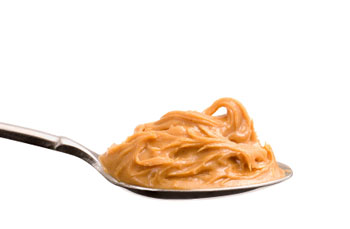
A dollop of peanut butter and a ruler can be used to confirm a diagnosis of early stage Alzheimer's disease, University of Florida Health researchers have found.
Jennifer Stamps, a graduate student in the University of Florida (UF) McKnight Brain Institute Center for Smell and Taste, and her colleagues reported the findings of a small pilot study in the Journal of the Neurological Sciences.
Stamps came up with the idea of using peanut butter to test for smell sensitivity while she was working with Dr. Kenneth Heilman, one of the world's best known behavioral neurologists, from the UF College of Medicine's department of neurology.

While shadowing doctors in Heilman's clinic, she noticed that patients were not tested for their sense of smell. The ability to smell is associated with the first cranial nerve and is often one of the first things to be affected in cognitive decline.

"Dr. Heilman said, 'If you can come up with something quick and inexpensive, we can do it,'" Stamps says.
 
She thought of peanut butter because, she said, it is a "pure odorant" that is only detected by the olfactory nerve and is easy to access.

Widespread problem

According to the Alzheimer's Association, Alzheimer's disease affects 5.2 million people in the US and will cost the nation $203 billion in this year alone.


The Association estimates that one American develops Alzheimer's every 68 seconds, and they expect to see this figure rise to one American every 33 seconds by 2050.
 
In the study, patients who were coming to the clinic for testing also sat down with a clinician, who was armed with 14 grams of peanut butter - which equals about 1 tablespoon - and a metric ruler. The patient closed his or her eyes and mouth and blocked one nostril.

The clinician opened the peanut butter container and held the ruler next to the open nostril while the patient breathed normally. By moving the peanut butter up the ruler 1 cm at a time during the patient's exhalation, they were able to measure the distance at which the patient could detect the odor.

The distance was recorded and the procedure repeated on the other nostril after a 90-second delay.
The clinicians running the test did not know the patients' diagnoses, which were not usually confirmed until weeks after the initial clinical testing.

Sense of smell loss

The scientists found that patients in the early stages of Alzheimer's disease had a dramatic difference in detecting odor between the left and right nostril - the left nostril was impaired and did not detect the smell until it was an average of 10 cm closer to the nose than the right nostril had made the detection in patients with Alzheimer's disease.
 
This was not the case in patients with other kinds of dementia; instead, these patients had either no differences in odor detection between nostrils or the right nostril was worse at detecting odor than the left one.

Of the 24 patients tested who had mild cognitive impairment, which sometimes signals Alzheimer's disease and sometimes turns out to be something else, about 10 patients showed a left nostril impairment and 14 patients did not.
The researchers said more studies must be conducted to fully understand the implications.
Stamps explains:

 "At the moment, we can use this test to confirm diagnosis. But we plan to study patients with mild cognitive impairment to see if this test might be used to predict which patients are going to get Alzheimer's disease." 


Stamps and Dr. Heilman point out that this test could be used by clinics that do not have access to the personnel or equipment to run other, more elaborate tests required for a specific diagnosis, which can lead to targeted treatment.
At UF Health, the peanut butter test will be one more tool to add to a full suite of clinical tests for neurological function in patients with memory disorders.

Non-invasive, early stage test

One of the first places in the brain to degenerate in people with Alzheimer's disease is the front part of the temporal lobe that evolved from the smell system, and this portion of the brain is involved in forming new memories.
"We see people with all kinds of memory disorders," Heilman said. Many tests to confirm a diagnosis of Alzheimer's disease or other dementias can be time-consuming, costly or invasive. "This can become an important part of the evaluation process."
The UF study could help by detecting a person's likelihood of developing the disease at a much earlier stage, with a non-invasive test.
The Alzheimer's Association acknowledge that at the moment, there is no cure for the disease, nor can current Alzheimer's treatments stop Alzheimer's from progressing. They can, however, temporarily slow the worsening of dementia symptoms. This improves the quality of life for both sufferers and their caregivers.

As Stamps says: 

 "If we can catch it at that early stage, we can start treatment more aggressively at the early stage and you can possibly prevent a lot of the progression." 

  including taking regular exercise and eating a balanced diet, could reduce your risk of developing Alzheimer's.
Read more »

'The Simpsons' gets Fox renewal for 26th season


Homer Simpson has a green light for a record 26th season of nuclear near-misses, fatherhood foibles and tavern tantrums.
 
Fox Broadcasting Co. announced Friday that "The Simpsons," already the longest-running scripted show in television history, has been renewed.

The animated show's 25th season debuted Sunday. Fox said ratings were up 12% from last year's average.
Read more »

Zuckerberg buys four new houses for, um, privacy


It's all about the timing.
On the one hand, you offer a loud piece of news that oh, no, people can't keep themselves private from Facebook's Graph Search anymore.

On the other, there emerges a whisper that you've bought four houses around your own in order to secure a little more, well, you know, seclusion.

Yes, Facebook's Mark Zuckerberg has reportedly dug deep into his jeans, found $30 million, and exchanged them for four houses adjacent to his own in Palo Alto, Calif.
As the San Jose Mercury News tells it, this isn't really out of fear that mooching paparazzi will move in next door, take photographs of him mowing the lawn, and put them up on, say, Facebook.
Well, actually it rather is. 

For Facebook's CEO reportedly heard word that an unscrupulous someone was trying to buy one of the neighboring houses and then market it as "The House Next Door to Mark Zuckerberg."
Gosh, that would be like taking someone's Facebook profile picture and using it to sell a 55-gallon tub of lube.

What kind of feeling-free, predatory money-grabber does something like that?
Zuckerberg, though, is keen not to disrupt the neighborhood (and his own image). So he's buying the houses and leasing them back to the folks who currently live in them.

The progressive purchases began last December. And one house he bought -- a 2,600 square-foot edifice -- fetched $14 million. Which seems even more absurd than the fee Yahoo paid for Tumblr.

I have contacted Facebook to see whether Zuckerberg might lease me a cellar in one of the houses -- I'm sorry, I mean to see whether the company might comment on this apparent sprint to privacy. I will update, should my request survive inspections.

This truly isn't a case of the rich not being like you and me. One can surely understand Zuckerberg not wanting to have people snooping around his steamed-up windows, or even buying a neighboring house just to live next to him.
This is more a case of the shifting definition of personal information.
Your personal life is now known as Facebook's data. Its CEO's personal life is now known as mind your own business.
Read more »

Android 4.4 KitKat detailed again in new Nexus 5 photo leak


Ahead of next week's expected debut of Android 4.4 KitKat are even more shots of Google's next flagship Nexus phone and the OS update. 

Italian tech site Tutto Android has an extensive gallery of the device with notes on what's new or different. That list includes tweaked voice activated search, a new camera shortcut from the lock screen, a different app drawer, and a camera that appears to use image stabilization. 

Google announced the name of its next Android OS update last month, surprising some by licensing the popular candy bar namesake from Nestle. It follows July's release of Android 4.3 Jelly Bean, which was introduced in late July alongside Google's Nexus 7 tablet. 

The photos come a week after an extensive leak from tech blog GadgetHelpLine, which posted a gallery of 4.4 shots showing new features like wireless display support, cellular phone plan settings, and new printing and payment options. 

Google's expected to take the full wraps off the OS update at a developer event next Tuesday.
Read more »